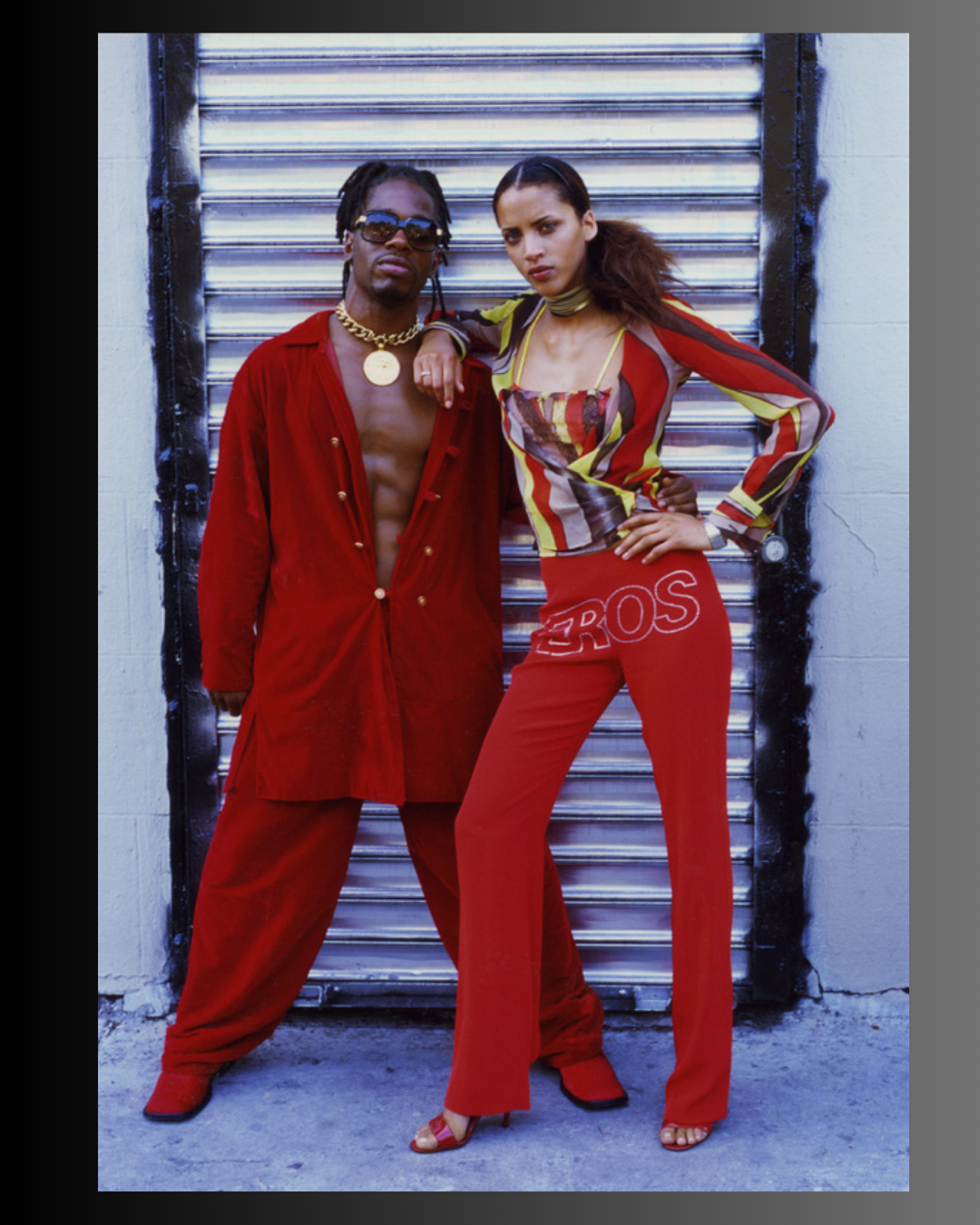
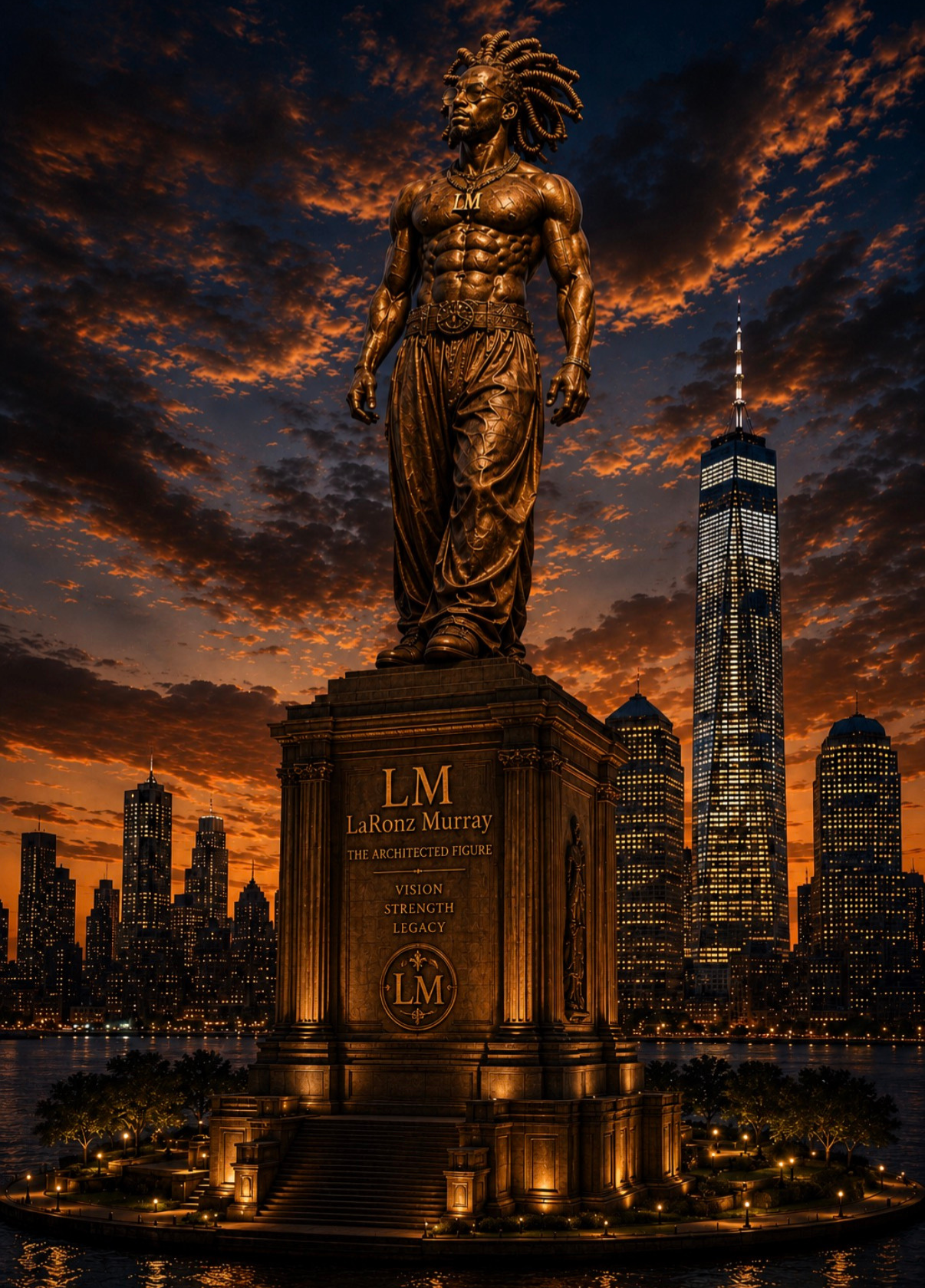
"I was on the cover
before I was in the story."
"For 26 years, one photograph has followed me — but I've never told the story behind it: where it came from, what it cost me to make, and what it meant."
On Camera — Dapper Dan
Dapper Dan proposed filming this moment himself, outside the Apollo Theater while I was vending my artwork (April 2025). On camera, he said:
"This is a book about dreams being fulfilled. Dreams being fulfilled right here… This is the man photographed on the cover. They got me in the book and him on the cover. They photographed the cover — that's me in the book and him on the cover… Y'all know I'm a talker… And I'm not gonna talk about something that's nothing."
Filmed at Dapper Dan's own suggestion. Quoted verbatim, as said.
On Camera — Daniel Power
"You can taste and feel the fabric and the atmosphere in the photographs, and now we see it brought to life." — Daniel Power
On-Screen — National Gallery of Art
In December 2025, the National Gallery of Art credited LaRonz Murray by name and role in "The Legend Who Shaped Brooklyn: How Jamel Shabazz Shaped Street Photography."
On-screen credit, 6:29: "LaRonz Murray — Model & Artist."
This is a live, on-screen credit — not a citation, not a restaging, not a research reference. A national museum naming a working artist, in the present tense, inside its own institutional documentary.

The Point Man
The Photograph Behind the Silence.
In 2000, photographer Jamel Shabazz photographed me and Noémie Lenoir during a shoot for Jalouse Magazine. The image was published that same year as a full page in Jalouse. It ran again in 2009, in Dr. Deborah Willis's book Posing Beauty in African American Culture (W.W. Norton), both in the book and as an exhibited image in the national touring exhibition.
Twenty-five years after it was taken, that same photograph became the cover of Jamel Shabazz's Drama & Flava (powerHouse Books, 2025) — with 24 additional photographs of me inside the book. That same year, The Metropolitan Museum of Art's Costume Institute (Watson Library) cited Drama & Flava as a resource informing Superfine: Tailoring Black Style, the Museum's 2025 exhibition and that year's Met Gala theme.
This is the story I've never told publicly: what it took to make that garment, and what it meant.
Institutional Footprint
Met Museum · National Gallery of Art · MoMA
National Gallery of Art
"The Legend Who Shaped Brooklyn: How Jamel Shabazz Shaped Street Photography," Dec 2025. On-screen credit at 6:29: "LaRonz Murray — Model & Artist."
The Museum of Modern Art
"Going Underground with Jamel Shabazz," Nov 2024. Credited in closing titles.
The Metropolitan Museum of Art
The Costume Institute's Watson Library cites Drama & Flava as a research resource behind Superfine: Tailoring Black Style, the Museum's 2025 exhibition and that year's Met Gala theme.
WorldCat Records
Library Distribution.
Combined, Drama & Flava and Posing Beauty are held by approximately 900 library systems worldwide, per WorldCat records:
- Drama & Flava — 51 holdings (search.worldcat.org/title/1528110607)
- Posing Beauty — 853 holdings (search.worldcat.org/title/310224903)
This reflects the two books' general library distribution — a normal outcome for commercially published, well-distributed titles — not a special curatorial recognition of any individual subject within them.
Met Costume Institute · 2025
"In October 2025, The Met's Costume Institute (Watson Library) published 'Behind the Seams' on its official site, describing library resources that informed its 2025 exhibition Superfine: Tailoring Black Style — the same exhibition that was that year's Met Gala theme. The article names Drama & Flava directly as one of the cited holdings, alongside titles including A Time Before Crack, A.L.T. 365+, and Dapper Dan's Harlem."
Source: metmuseum.org — "Behind the Seams," Oct 2025
LaRonz Murray is on the cover of that book. The cover image was shot in 2000. He has never been interviewed about it.
Confirmed by the Publisher
powerHouse Books & Jamel Shabazz — October 2025
In October 2025, powerHouse Books and Jamel Shabazz jointly posted from their verified accounts about the launch of Drama & Flava, referencing "the model on the cover."
powerHouse Arena · Launch
The Installation.
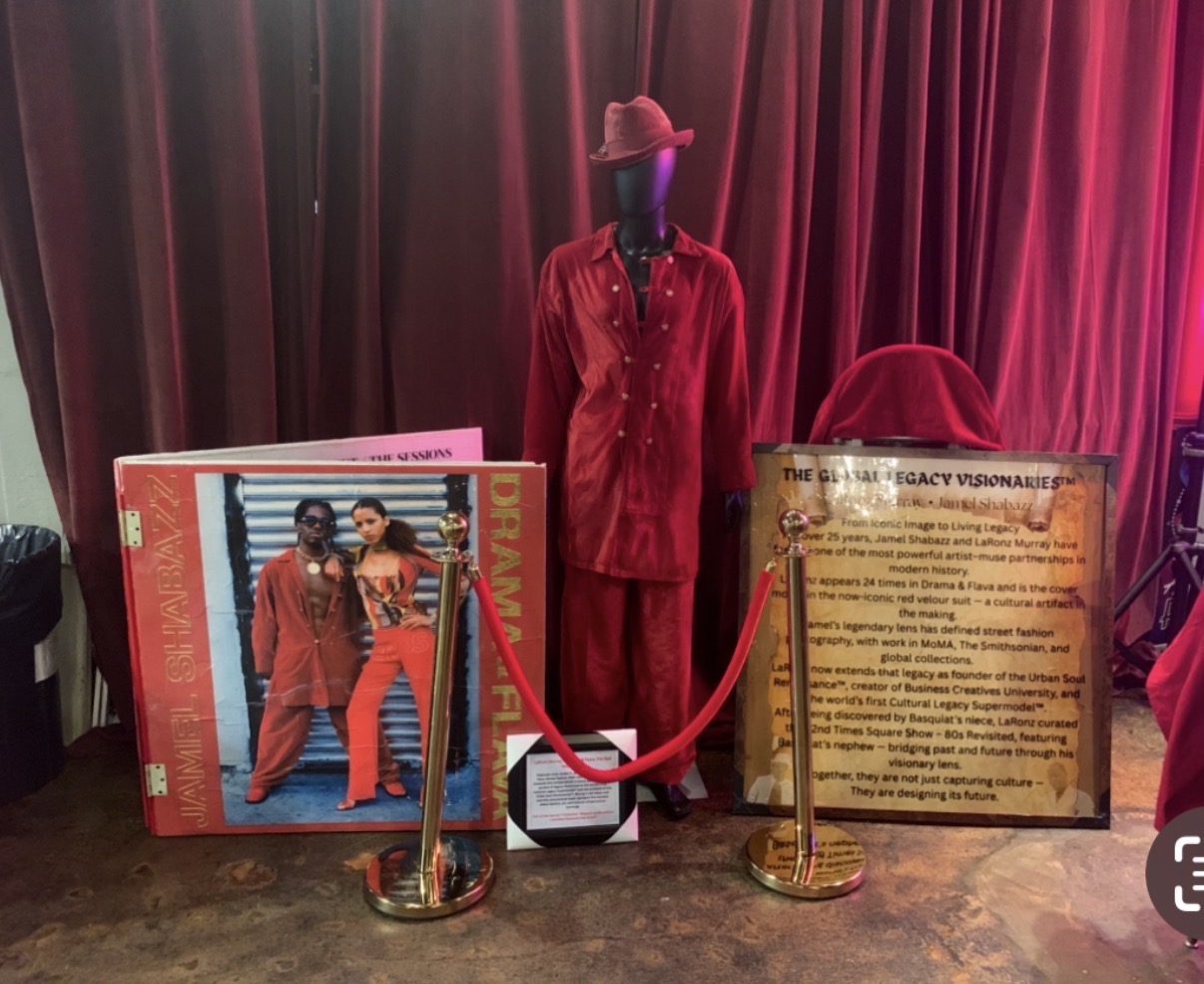
The red velour garment displayed alongside the book
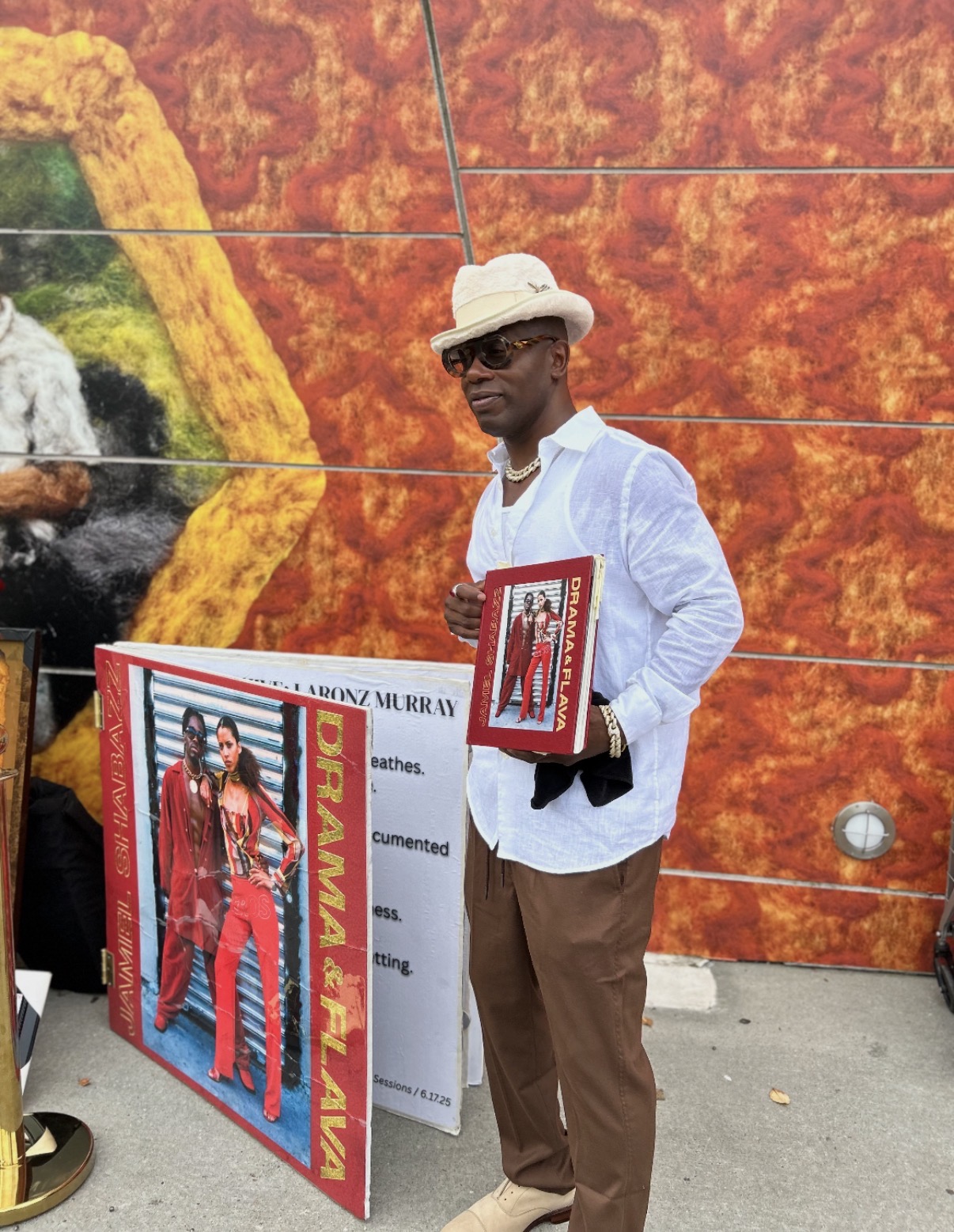
LaRonz Murray in front of the installation
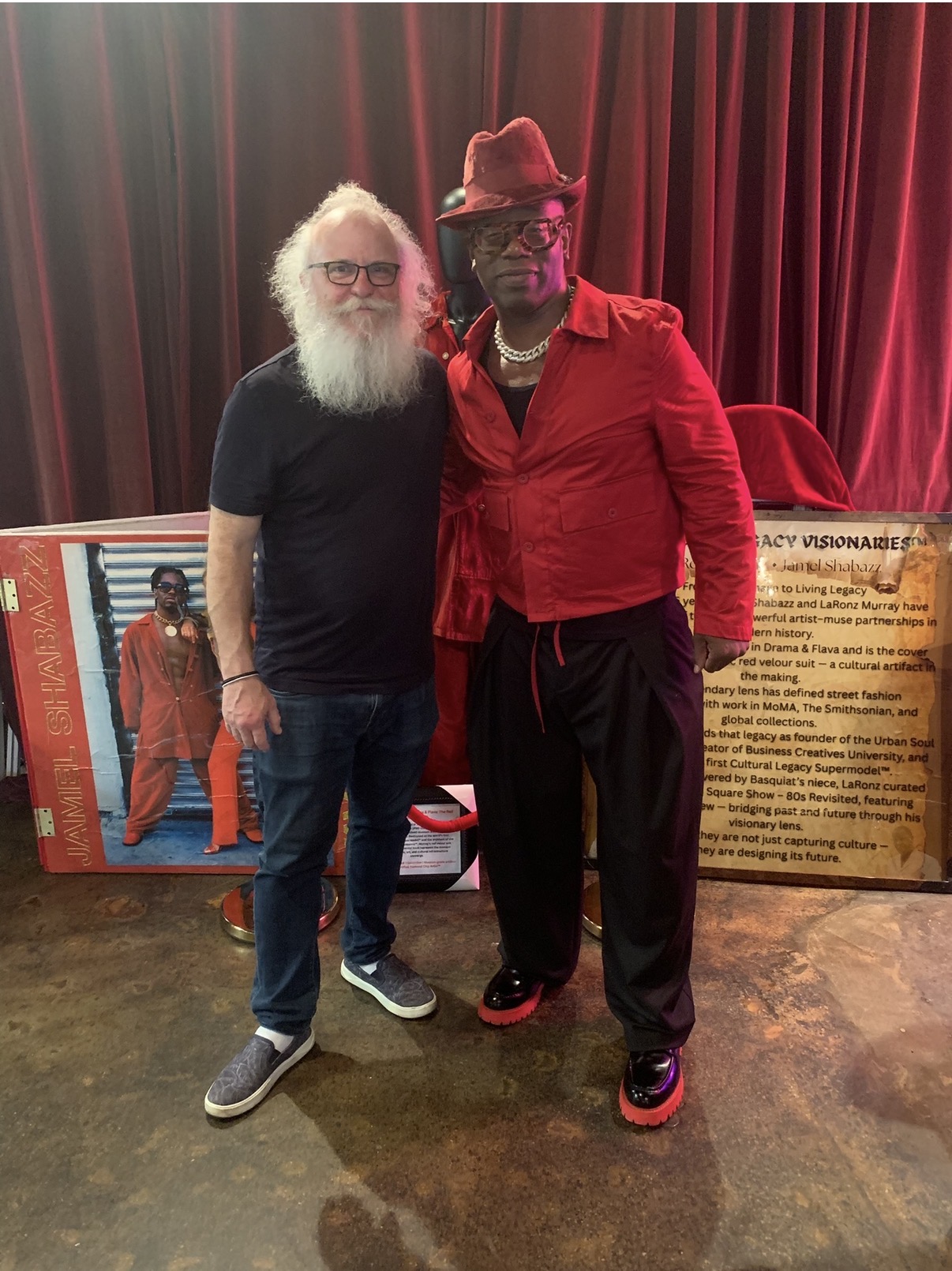
With Daniel Power, founder of powerHouse Books — the publisher of Drama & Flava
One Garment, Two Eras
The Shirt That Crossed Twenty-Four Years.
2000 — Jamel Shabazz, with Noémie Lenoir
Spring 2024 — Harper's Bazaar France, with Yasmine Warsame
Left: 2000, New York, with Noémie Lenoir. Photography: Jamel Shabazz. Right: Spring 2024, Harper's Bazaar France, with Yasmine Warsame. Styling: LaRonz Murray, both instances.
In 2000, photographer Jamel Shabazz photographed LaRonz Murray and Noémie Lenoir in a self-directed red velour outfit — the garment that would become the cover of Drama & Flava twenty-five years later.
In Spring 2024, that same red velour design resurfaced — the shirt from the original outfit, self-styled once again by Murray, in a 12-page Harper's Bazaar France spread alongside supermodel Yasmine Warsame. Murray appears in four of the twelve pages.
Same designer. Same self-directed styling instinct. Twenty-four years apart. Two supermodels. One garment, still in circulation in major fashion editorial.
"The design didn't stay in 2000. It walked back into a major fashion magazine twenty-four years later — styled by the same hand."
Full institutional and provenance documentation of the original 2000 garment: The Murray Records ↗
Published Credits
The Record.
Editorial
- The Source
- VIBE
- Black Book
- XXL
- FADER
- Jalouse
- Amsterdam News
- New York Times
- Harper's Bazaar France Spring 2024 — 12-page feature
Books & Exhibitions
- Drama & Flava — Cover + 24 interior appearances, powerHouse Books 2025
- Posing Beauty — Dr. Deborah Willis, W.W. Norton 2009
- Seconds of My Life — Jamel Shabazz, powerHouse Books
- Hip Hop Immortals — The Remix, Thundermouth
- Fashion Week NYC — Designer Franklin Rowe
42nd Times Sq. Show REMIXED — 80s Revisited
A Multicultural Group Exhibition · ArtistsFusionTV & Movement, in association with James Top Productions
Created, visualized, and curated by LaRonz Murray, this group exhibition paid homage to the original 1980 Times Square Show and old-school hip-hop legends. Murray both curated and exhibited original work in the show, and appeared on the official promotional bill as "LaRonz Murray — Art Rock Superstar."
- Grand Opening Reception: October 24, 2014, 6:00–9:30pm — 310 West 43rd Street, Times Square
- On display: October 7 – November 5, 2014
- Artists Panel Discussion: October 29, 2014
- Featured performers: Response Basquiat (nephew of Jean-Michel Basquiat), Rahzel Jr., BB Thomaz
- Special guest: Ralph McDaniels ("Uncle Ralph"), creator of Video Music Box, opened the show
- Exhibiting artists included: Duro, James Top, Andre LeRoy Davis, Ka-Son Reeves, Crespo, Tyson Hall, Joe Conzo, and others
Third-Party Coverage
- Swagga Music (Oct 25, 2014) — "From legends of graffiti nephew Basquiat in an art exhibition in New York and justice," featuring Murray and the exhibited work
- ADDMAG (Always Doing Damage) — documented the installation

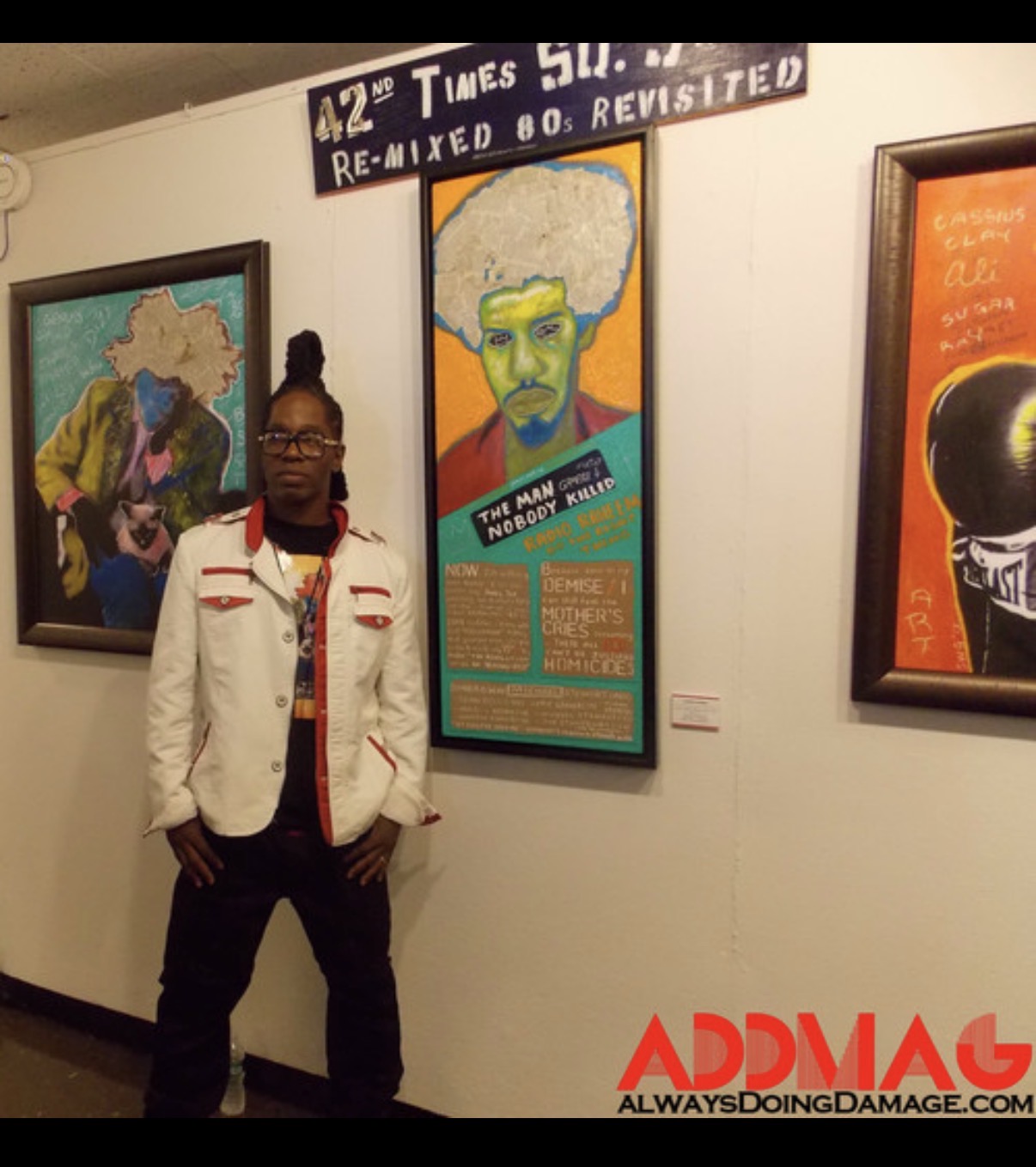
Murray with exhibited paintings
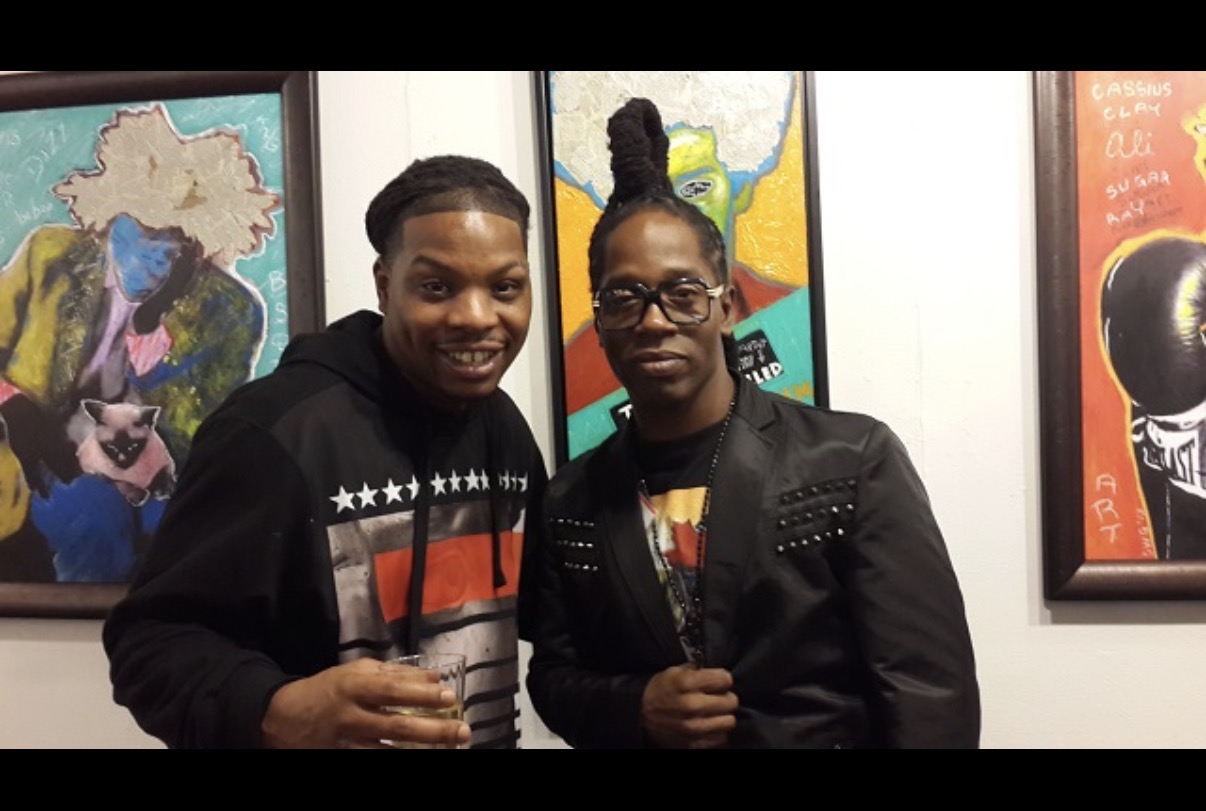
Murray with Response Basquiat at the reception
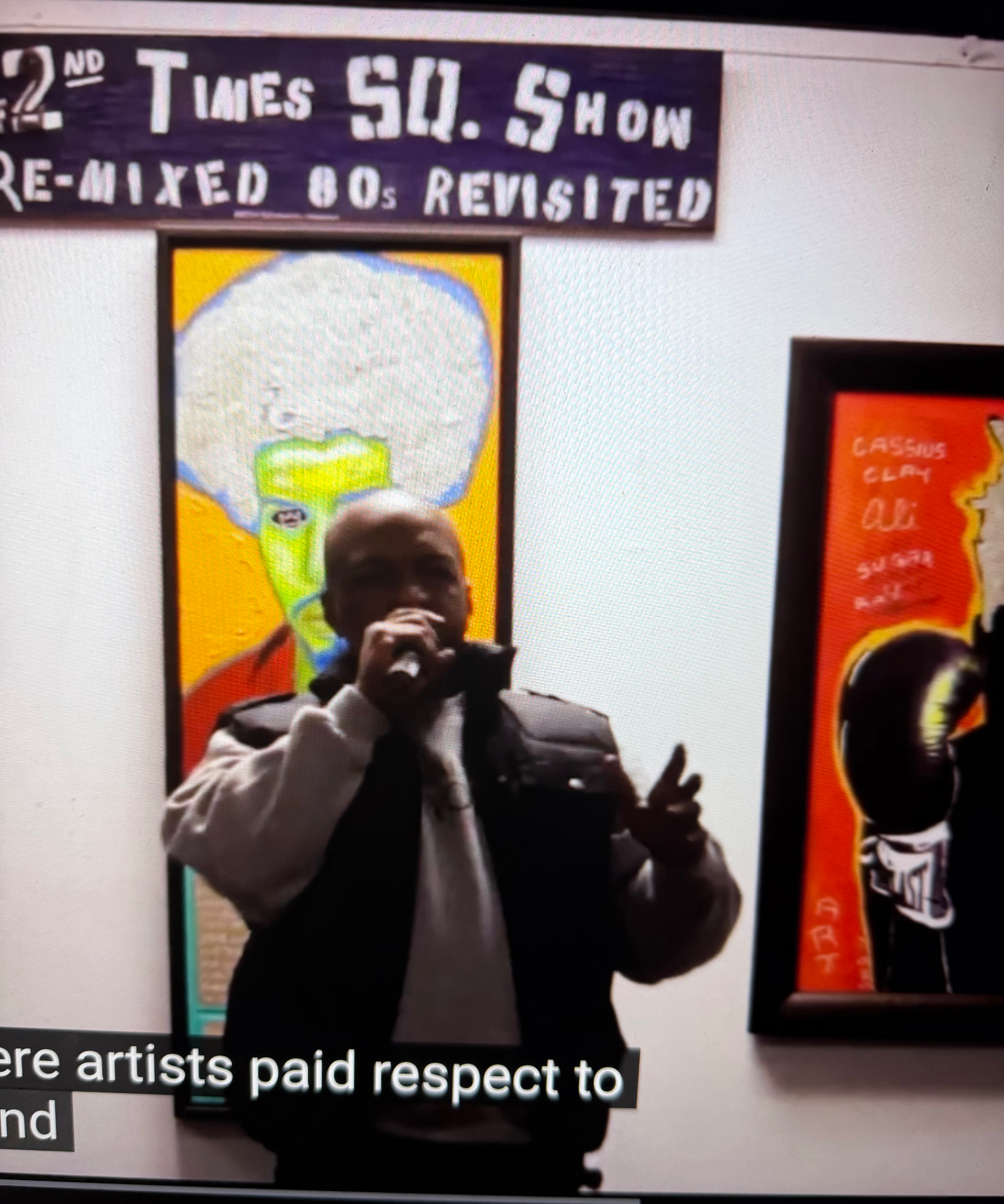
Ralph McDaniels addressing the room at opening
Chronology
Confirmed, Independently Dated Events.
- 1982Dapper Dan opens his Harlem boutique.
- Early 1990sDapper Dan forced to close after trademark infringement lawsuits.
- 2000Jamel Shabazz photographs LaRonz Murray and Noémie Lenoir for Jalouse Magazine; published as a full page that same year.
- 2006Shayne Oliver founds Hood By Air, coining "luxury streetwear."
- 2009Image published again in Posing Beauty (W.W. Norton) and its national touring exhibition.
- 2011A$AP Rocky's Live.Love.A$AP releases; Complex documents photographer Brock Fetch citing Shabazz's catalog while building Rocky's visual identity.
- 2012–13Virgil Abloh launches Pyrex Vision, then Off-White.
- 2017Gucci publicly credits Dapper Dan and launches an official collaboration, reopening his Harlem studio.
- 2018Abloh named artistic director of Louis Vuitton menswear.
- 2023Pharrell Williams named Louis Vuitton menswear creative director, succeeding Abloh.
- 202525 years after it was taken, the photograph becomes the cover of Drama & Flava; the Met's Costume Institute cites the book the same year as a research resource behind that year's Met Gala theme exhibition.
No single documented coining date exists for "street luxury" as an industry term. This timeline presents only confirmed, independently dated events.
The Afterlife
NYFW 2126 — Drama & Flava Forward.
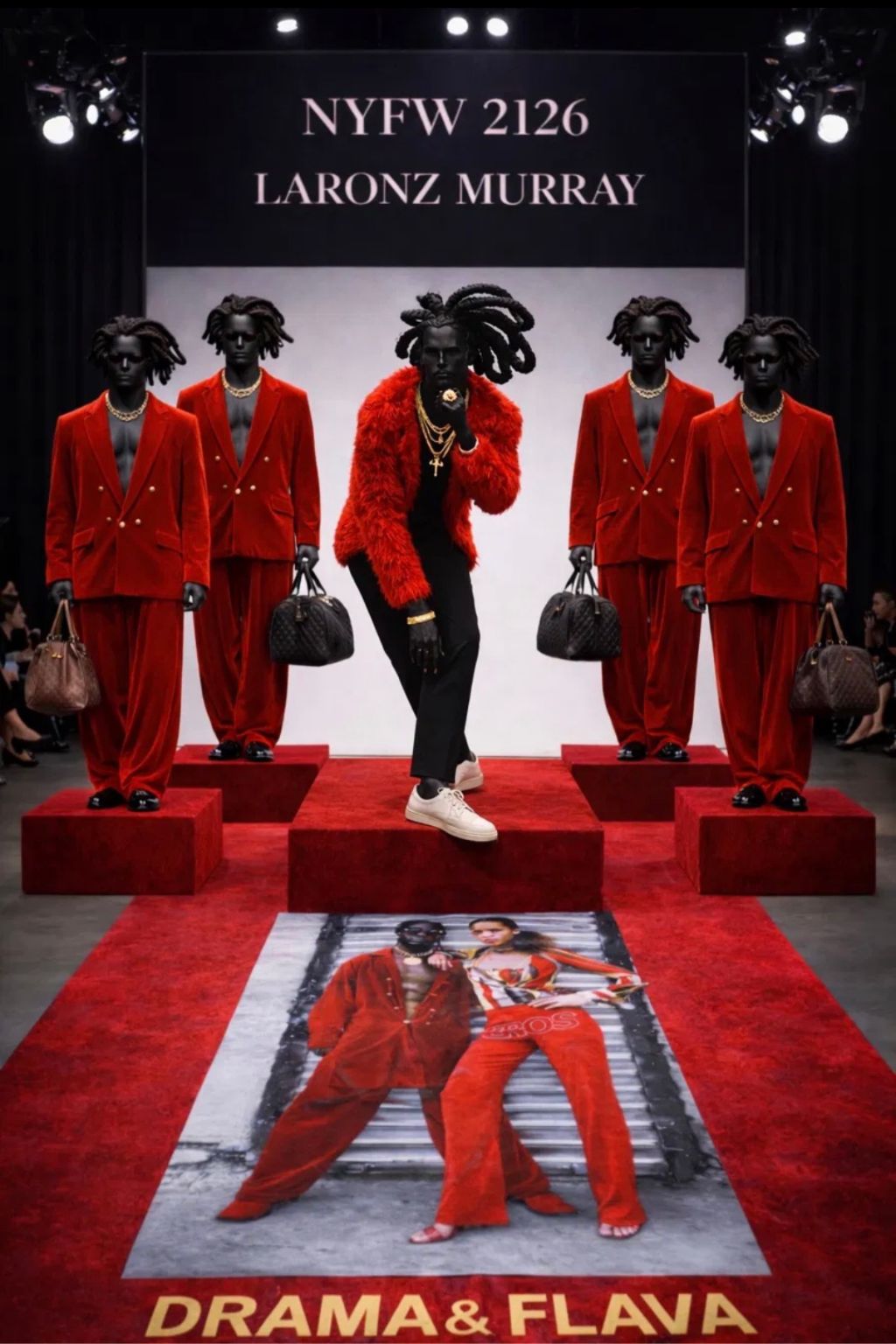
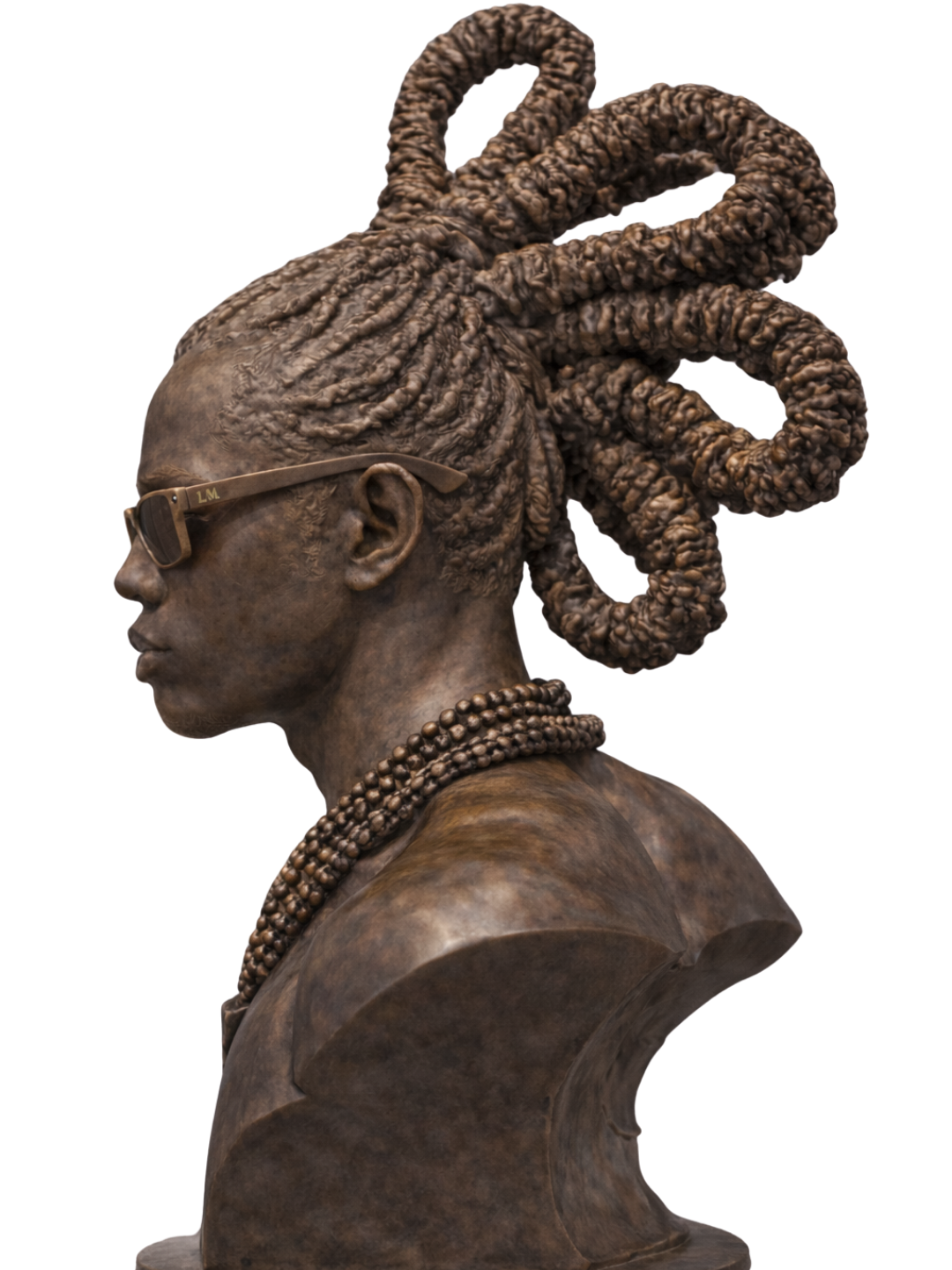
In response to the cultural silence surrounding the Drama & Flava release, LaRonz Murray created NYFW 2126 — a visual concept projecting the legacy of Jamel Shabazz's work one hundred years forward. The original Drama & Flava photograph becomes the runway foundation — the floor that the future walks on. The LM 2.0 matte black mannequins, dressed in the red velour aesthetic, flank the runway as an army of the posing methodology scaled. The center figure reinterprets Shabazz's iconic Rude Boy image. Shabazz is credited as the inspiration.
Concept: LaRonz Murray. Inspired by Jamel Shabazz's Rude Boy. Drama & Flava, Powerhouse Books, 2025.
The seven-part NYFW 2126 series received significant response across TikTok and Instagram.
Campaign Afterlife inquiries: laronzmurray@gmail.com
Press FAQ
Before You Ask.
Who is LaRonz Murray?
LaRonz Murray is the co-architect of the visual methodology behind Jamel Shabazz's most significant body of work. Beginning in 2000, he served as Shabazz's point man on the streets of New York City — recruiting models, developing the posing methodology, orchestrating the shoot energy that Shabazz named Drama & Flava.
What is Drama & Flava?
Drama & Flava is a photography book by Jamel Shabazz published by powerHouse Books in June 2025. In October 2025, The Met's Costume Institute (Watson Library) named it as one of the cited library holdings that informed its 2025 exhibition Superfine: Tailoring Black Style — that year's Met Gala theme. Murray is on the cover.
What is Murray available for?
Long-form print interviews, podcast conversations, academic lectures, panel discussions, and museum programming. A full provenance document is available upon request.
What is the Giants exhibition?
Giants is a touring exhibition produced by Swizz Beatz and Alicia Keys celebrating Black excellence in art. The Drama & Flava book is featured in the Giants gift shop at venues including the Brooklyn Museum, the High Museum (Atlanta), and MCASD San Diego.
What is NYFW 2126?
NYFW 2126 is a visual concept created by LaRonz Murray projecting the Drama & Flava aesthetic legacy one hundred years forward. A seven-part series posted across TikTok and Instagram during NYFW. The center figure reinterprets Jamel Shabazz's iconic Rude Boy image — Shabazz credited as inspiration. Campaign Afterlife and brand licensing inquiries welcome.
Has this garment appeared anywhere since 2000?
Yes — the design resurfaced in Spring 2024, self-styled by Murray, appearing in 4 of the 12 pages of a Harper's Bazaar France spread with supermodel Yasmine Warsame. See “One Garment, Two Eras” above for the full story.
Is a press kit available?
Yes. Contact directly for the full provenance document, high-resolution press materials, and interview scheduling.
An Open Question
"Is LaRonz Murray the missing link between Dapper Dan's logo mania and the rise of street style within luxury fashion under Virgil Abloh, A$AP Rocky, and Pharrell Williams?"
This page does not assert that claim. It presents the dated, verifiable facts — the photograph, its publication history, and the surrounding timeline — so that a journalist, researcher, or reader can assess the question and draw their own conclusion.
What Can Be Stated Plainly
LaRonz Murray is a primary, recurring, named subject within the specific body of work — Jamel Shabazz's photography — that has been documented as a reference and influence on the era that followed, including by Brock Fetch in developing the visual identity for A$AP Rocky's Live.Love.A$AP. This is a statement about proximity and presence within that documented archive, not a claim of direct causation or personal influence over any individual artist. The reader is invited to weigh what that proximity means.
Press & Media Inquiries Only
The conversation starts here.
This page is intended for press, media, writers, curators, and institutional contacts only.